


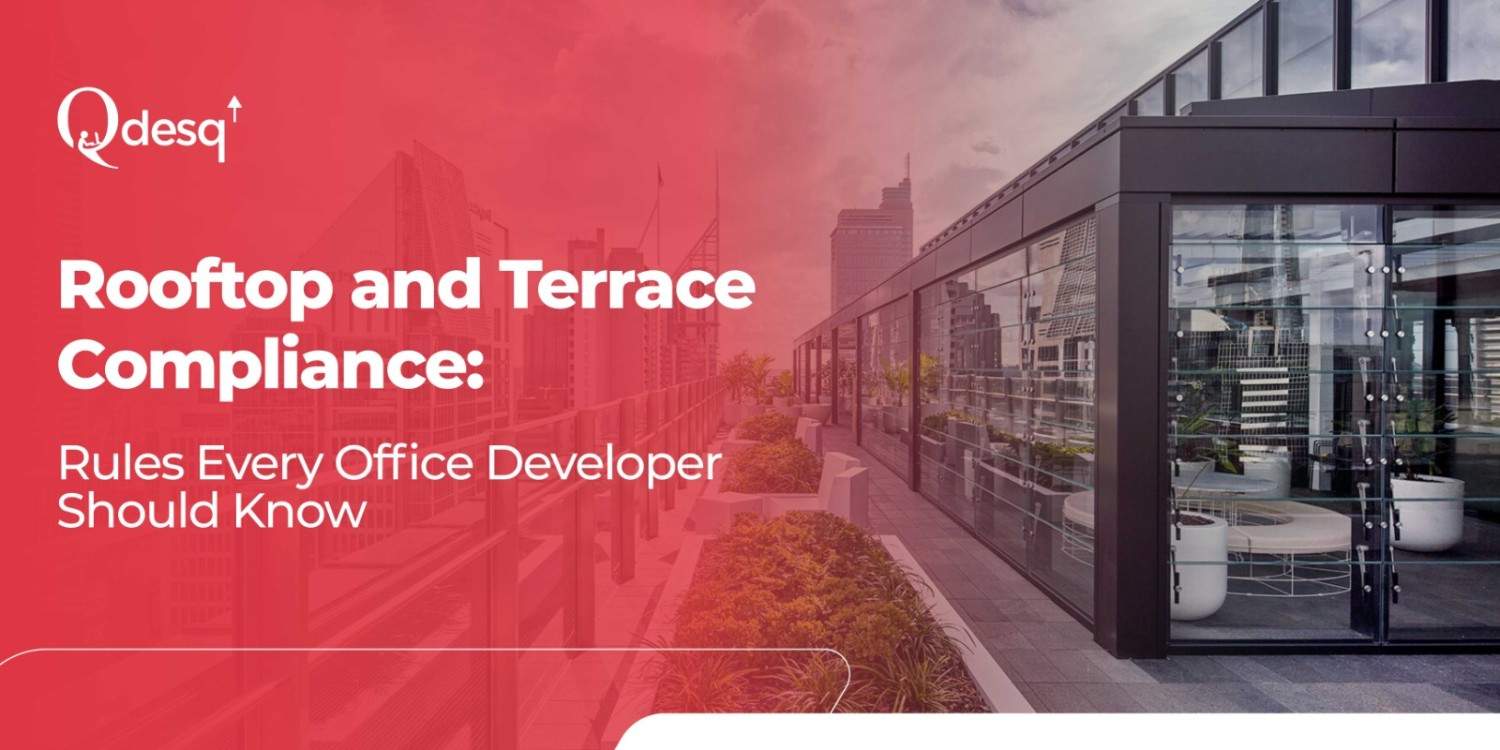
When we think of a sleek, vibrant rooftop or terrace where employees gather, collaborate, or simply unwind, it’s easy to imagine the perfect space for creativity and relaxation. These spaces have become essential in today’s office design.
But the point is that turning that dream rooftop into a reality isn’t as simple as adding some furniture and plants. There are many rules and regulations you need to get right. Mess that up, and you could face fines, penalties, or even lose access to the space altogether.
As an office developer, understanding the compliance rules for rooftop and terrace construction is key. Here’s what you need to know to get it right and ensure a safe, functional, and legal space.
Approvals, Documentation, and Legal Obligations
Before you even consider opening your rooftop to employees or tenants, you must secure the necessary approvals. Local, municipal, and fire authorities must approve your plans, and in some cases, you might also need a No Objection Certificate (NOC) from the building’s owners’ association.
What you need:
- Municipal Approvals & Fire Safety Certificates: These are mandatory before the construction or repurposing of rooftop spaces. This ensures that your design aligns with local building codes and fire safety standards.
- Documenting Everything: Keep comprehensive records of inspections, safety audits, and maintenance schedules. An indemnity bond may also be required to hold you accountable for any future incidents.
Structural Integrity and Load Capacity
A rooftop or terrace isn’t just a place to throw down some lounge chairs; it must be able to handle additional weight from people, furniture, and equipment. Structural integrity is key to ensuring safety.
What you need to know:
- Load Capacity: Consult a licensed structural engineer to confirm that your rooftop can support the intended use, whether it’s office seating or a rooftop garden. Your roof must meet the National Building Code (NBC) live-load requirements.
- Restrictions on New Construction: In many jurisdictions, permanent structures like rooms, sheds, or pergolas are prohibited on rooftops. Be sure to design in compliance with local bylaws.
- Common Areas vs. Exclusive Use: In most cases, rooftops are considered common areas, accessible by all tenants. You cannot sell or lease these areas unless explicitly outlined in the approved plans.
Fire Safety and Emergency Compliance
Rooftops and terraces present a significant fire risk, particularly in high-rise buildings. Proper fire safety measures and clear escape routes are critical.
What you need to do:
- Emergency Access: Ensure that rooftop exits are unlocked and easily accessible at all times. If your building is over 15 meters tall (5 floors), this is particularly critical.
- Fire Safety Systems: Install smoke detectors, sprinklers, and fire escape stairs to comply with safety regulations. According to the National Fire Protection Association (NFPA), rooftops above a certain height must have fully functional fire suppression systems.
- Evacuation Plans: Post clear evacuation routes and train staff in emergency procedures.
Fall Protection and Safety
Rooftop safety is crucial, and fall protection systems are legally required to ensure the safety of everyone using the space.
What you need to ensure:
- Edge Protection: Install permanent guardrails or parapets to prevent falls, especially around unprotected drops.
- Safe Walkways: Create non-slip walkways to guide personnel safely, especially around mechanical equipment such as HVAC units.
- Protect Openings: Roof hatches and skylights must be secured with guardrails or screens to prevent accidents.
Fire-Resistant Materials and Safety Systems
If your rooftop will serve as an event space, café, or any other commercial function, you must use fire-resistant materials. Using combustible materials for flooring, furniture, or landscaping is a serious violation in many cities.
What you should do:
- Non-Combustible Materials: Choose fire-retardant or non-combustible materials, especially for flooring, furniture, and roofing.
- Fire Fighting Equipment: If your building has fixed fire-fighting systems, ensure fire hydrants, hose reels, and emergency lighting are available on the terrace.
Environmental Considerations and Sustainability
Sustainability is becoming a key focus in modern office developments. Rooftops and terraces play an essential role in reducing a building’s environmental footprint.
What you can incorporate:
- Green Roofs: Consider green roofing options to enhance stormwater management, improve air quality, and increase energy efficiency. Cities are increasingly mandating green roofs as part of building regulations.
- Solar Panels: Rooftops are an excellent space for solar panels, helping reduce energy costs and lower the building’s carbon footprint.
- Stormwater Management: Implement features such as rainwater harvesting systems or permeable surfaces to minimize runoff and ease pressure on municipal drainage systems.
Tenant Usage and Occupancy Limits
If your rooftop is used for events or general tenant access, you must regulate occupancy and ensure safe conditions at all times.
What you need to monitor:
- Occupancy Limits: Establish a maximum occupant load based on the terrace’s design, exits, and stairways. Exceeding the limit can result in safety hazards and legal trouble.
- Event Usage: If the space is used for events, ensure compliance with crowd control and noise regulations. This includes managing sound levels, restricting gas cylinders, and providing adequate exits.
- Licensing and Permits: Ensure you have the proper licenses and approvals in place if you plan to use the rooftop for commercial activities.
Navigating Compliance with Confidence with Qdesq
For office developers, rooftop and terrace compliance may seem overwhelming, but addressing it early on sets your space up for long-term success. By securing the proper approvals, ensuring structural integrity, meeting fire safety standards, and embracing sustainability, your rooftop becomes a valuable asset that enhances both building performance and appeal.
Early compliance integration means quicker approvals and fewer redesigns. Prioritize safety and sustainability not only to meet legal requirements but also to boost the value of your development.
Partner with Qdesq to streamline your process and make your vision for a safe, smart office space a reality. Let’s build your future today.



