


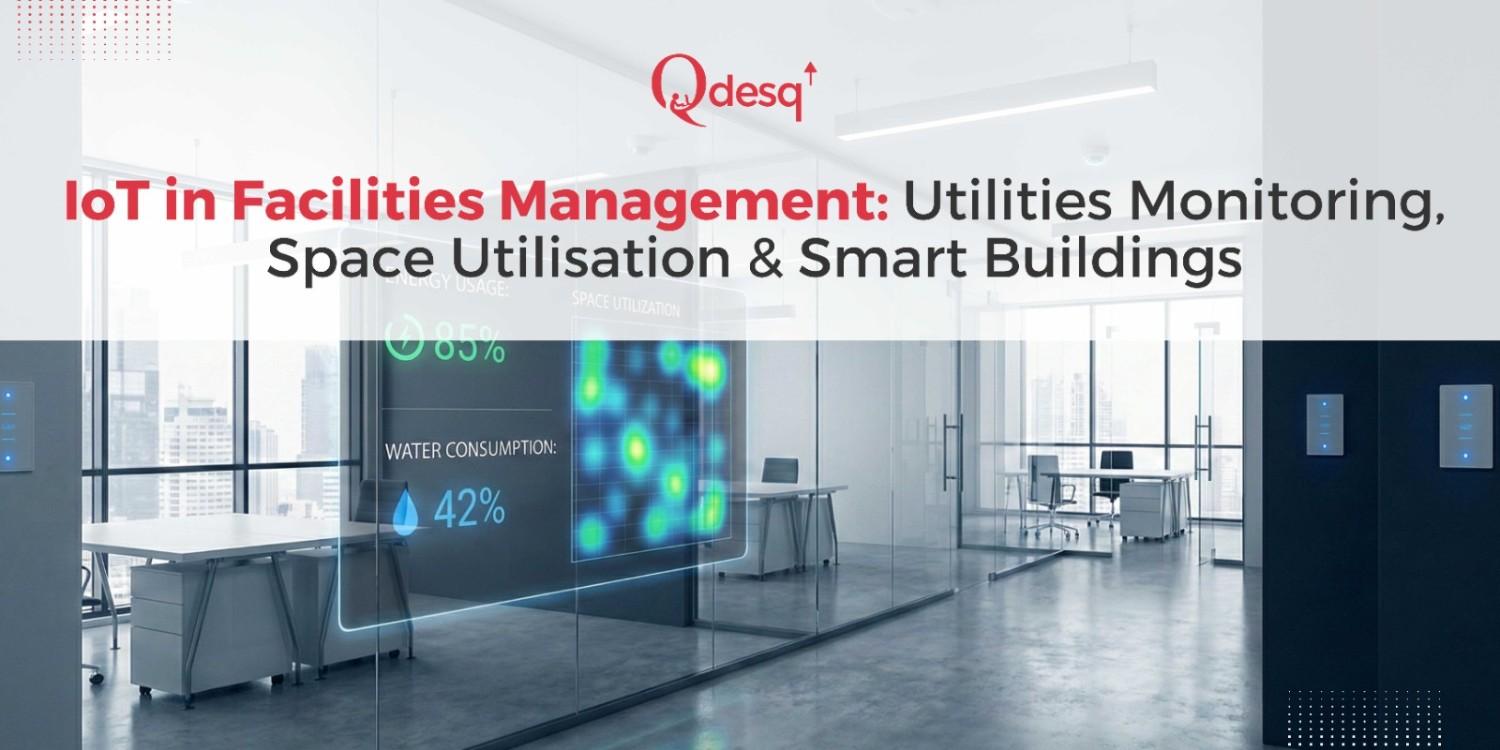
The Internet of Things (IoT) is transforming facilities management by enabling real-time monitoring of utilities, space usage, equipment health, and environmental conditions. By connecting sensors, systems, and analytics platforms, facilities teams can move from reactive operations to data-driven, predictive, and optimised building management.
This guide explains what IoT is in facilities management, how it works, key use cases, and why it is essential for modern buildings.
What Is IoT in Facilities Management?
IoT in facilities management refers to the use of connected sensors, devices, and software platforms to collect, analyse, and act on real-time data from building systems.
Core Components
- Sensors (occupancy, temperature, humidity, energy, water, air quality)
- Connected systems (HVAC, lighting, utilities, security)
- Centralised dashboards and analytics platforms
- Automated controls and alerts
These components work together to provide continuous visibility and automated decision-making across facilities.
Why IoT Is Important for Facilities Management
Facilities management traditionally relies on manual inspections, static schedules, and historical assumptions. IoT replaces this approach with real-time intelligence.
Key Benefits
- Reduced operational costs
- Improved energy and water efficiency
- Optimised space utilisation
- Predictive maintenance and reduced downtime
- Enhanced occupant comfort and safety
IoT enables facilities teams to measure what was previously invisible.
IoT for Utilities Monitoring
Utilities are among the highest controllable costs in facilities management.
Energy Monitoring
IoT enables:
- Real-time energy tracking by floor, zone, or room
- Identification of peak demand and energy waste
- Automated HVAC and lighting adjustments based on occupancy
This results in lower energy consumption without compromising comfort.
Water Monitoring
- Continuous tracking of water usage
- Instant leak detection and alerts
- Reduced water waste and damage prevention
IoT for Space Monitoring and Utilization
Why Space Data Matters
Unused or underutilised space leads to:
- Higher rent and lease costs
- Inefficient layouts
- Poor employee experience
IoT provides objective space utilisation data.
Occupancy and Space Analytics
- Desk, room, and zone usage tracking
- Peak vs low utilisation analysis
- Support for hybrid and flexible work models
Facilities leaders can make informed decisions about reducing, reconfiguring, or expanding space.
Predictive Maintenance Using IoT
How Predictive Maintenance Works
IoT sensors monitor:
- Equipment temperature
- Vibration patterns
- Performance anomalies
This data is analysed to predict failures before they occur.
Business Impact
- Reduced emergency repairs
- Extended asset lifespan
- Lower maintenance costs
- Improved service reliability
Predictive maintenance shifts facilities teams from firefighting to strategic planning.
IoT for Safety, Security, and Occupant Well-Being
Environmental Monitoring
- Indoor air quality (CO₂, VOCs, humidity)
- Automated system responses to unhealthy conditions
Security and Emergency Management
- Smart access control and surveillance
- Real-time alerts for unusual activity
- Faster response to fires, floods, or system failures
IoT enhances both physical safety and environmental comfort.
Unified Building Intelligence with IoT Platforms
IoT integrates previously siloed building systems into a single source of truth.
What Facilities Managers Gain
- Real-time dashboards and alerts
- Trend analysis and anomaly detection
- Data-backed budgeting and capital planning
This unified visibility enables faster, more confident decision-making.
Common IoT Use Cases in Facilities Management
High-Value Applications
- HVAC optimisation based on occupancy
- Smart lighting with daylight and motion sensing
- Asset tracking and utilisation monitoring
- Indoor environmental quality control
These use cases deliver measurable ROI and operational efficiency.
How IoT Supports Sustainable Facilities
IoT directly supports sustainability goals by:
- Reducing energy and water consumption
- Minimising waste and overuse
- Enabling data-driven ESG reporting
Smart facilities are not only efficient—they are environmentally responsible.
The Future of Facilities Management with IoT
Facilities are evolving from static infrastructure into intelligent, responsive ecosystems. IoT enables buildings to adapt dynamically to how people use space, consume resources, and interact with their environment.
As work models become more flexible and cost pressures increase, IoT will be a foundational technology for offices, campuses, hospitals, coworking spaces, and commercial buildings.
Organisations that adopt IoT-driven facilities management gain operational clarity, cost efficiency, and long-term resilience.



