


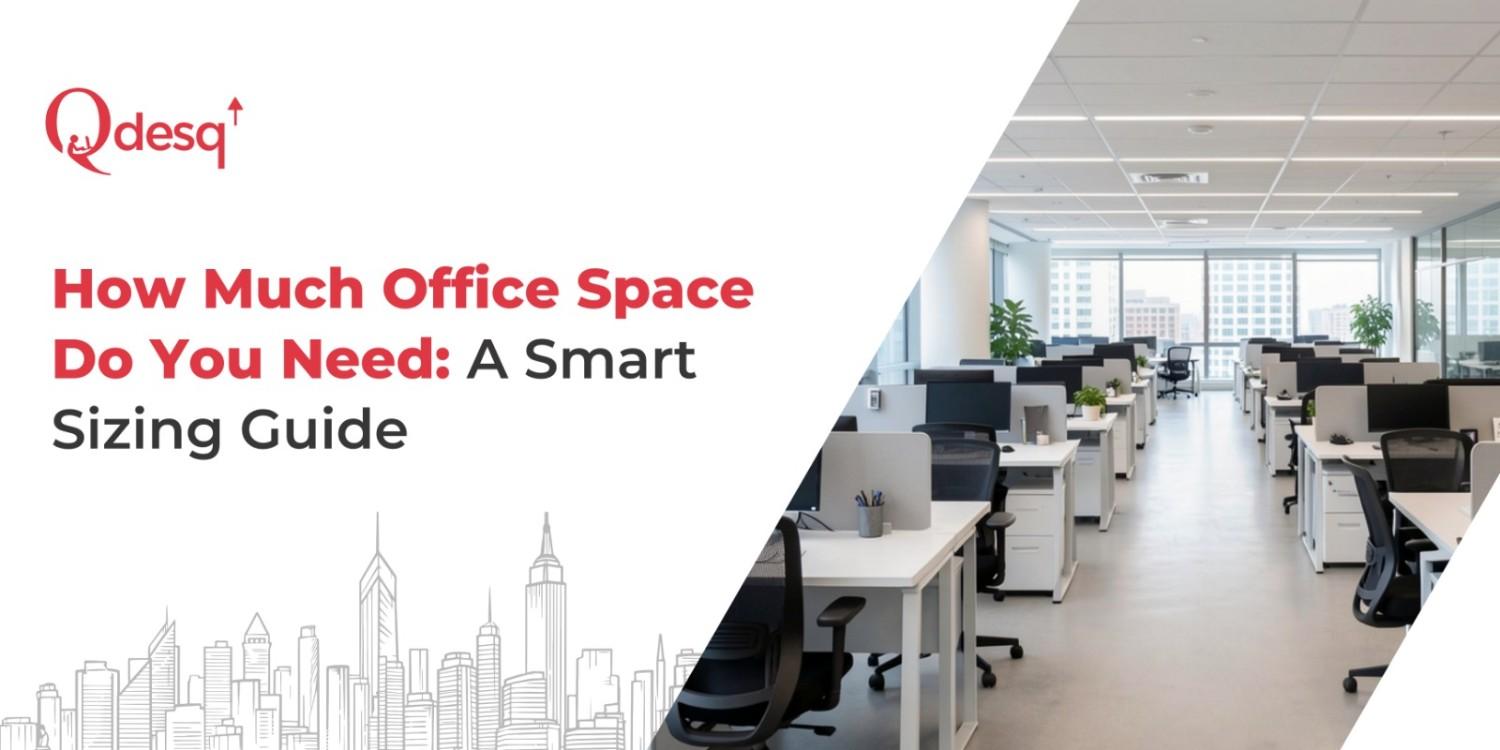
Most companies realise they need an office only when things start feeling cramped; people fighting for meeting rooms, no quiet corner left, and new hires working out of the pantry. And suddenly the question hits: “How much office space do we actually need?”
The truth is that there’s no universal number. But there is a smart, simple way to figure it out, without turning it into a math problem.
This guide walks you through those decisions clearly: what affects your space needs, what global benchmarks say, and some workplace trends. Let’s make sure your next office isn’t too small on day one or too expensive for no reason.
Start With the Benchmark — Your Baseline Number
Instead of starting from scratch, use what most companies follow globally:
Modern offices typically fall between 150–175 sq ft per person, including a fair share of meeting rooms, collaboration spaces, circulation, and amenities.
This is not a “rule,” just a helpful anchor, a clean starting point before we adjust for your team’s reality.
Now Adjust It to Your Real Work Style
The baseline changes depending on how your team works. These are the factors that matter most:
1. Team Size & Role Mix
A 20-member dev team won’t use space the same way a 20-member sales team does.
- Developers prefer quiet pods, focus rooms, and fewer meetings.
- Sales, marketing, and client-facing roles need huddle rooms and Zoom booths.
The more collaborative the function, the more meeting areas you need.
2. Work Model (Hybrid, Remote-First, or Full On-Site)
Hybrid work is the biggest disruptor of office sizing in the past five years.
- JLL reported global office utilisation climbing back to 54% in 2025, proving people are returning to offices but not five days a week.
- This means companies aren’t assigning desks anymore; they’re giving people the right spaces for the days they come in.
If your team is hybrid, you can size your office based on peak attendance, not headcount. This prevents paying for empty desks.
3. Amenities & Experience Expectations
Today, the office is competing with home comfort. Teams expect:
- A lounge-like common area
- A decent pantry
- Phone booths
- A few focus rooms
- Open collaboration spots
All these require square footage, but they’re what make people actually want to come to the office. Companies investing in amenities typically require a bit more space per person, but see higher utilisation.
4. Future Hiring Plan (This One Is Ignored the Most)
Most businesses size offices for “today,” not “6–18 months from now.” If you’re hiring aggressively:
- Plan for a buffer.
- Or mix your core office with flexible seating at nearby coworking spaces.
The coworking market has been expanding steadily through 2024–2025, driven by companies needing a scalable workspace.
This gives you breathing room without locking into a larger, expensive lease.
A Simple Way to Think About Your Total Space
Here’s a clean framework every company can use:
Start With People, Then Play With Space Types
Every team needs a mix of these zones:
- Workstations – where people sit
- Meeting spaces – from 2-person booths to 8-person rooms
- Collaboration zones – sofas, standing tables, breakout corners
- Amenities – pantry, wellness room, reception
- Circulation – the walkways, storage, washrooms, server room, etc.
Instead of calculating numbers, think in proportions.
For example:
- In hybrid teams, workstations might take up only 40–50% of the office.
- Meeting rooms & collaboration areas might take 30–40%.
- The rest goes to amenities and movement.
You can adjust these percentages depending on how your people work.
A Realistic Example You Can Relate To
Let’s say you have a 40-person team.
- But only 60% show up on a typical day because of hybrid schedules.
- That means you’re designing your office for peak days, not full headcount.
In a modern setup, the office might look like this:
- Workstations: Enough for your typical on-site number + a small buffer
- Meeting spaces: 2 small rooms, 1 medium room, and 2 phone booths
- Collaboration areas: A sofa zone + a long table for brainstorms
- Amenities: Pantry, storage, and a small reception
- Circulation: Whatever your floor plan requires
Put all this together, and you’d likely land somewhere around 2,400–2,600 sq ft, comfortably accommodating your peak attendance without waste.
Modern Space Trends You Must Factor In
The way companies design offices is changing fast. Here are the trends influencing how much space you actually need:
1. Flexible Seating is the New Normal
Companies are moving away from a one-desk-per-employee model.
- Hot-desking
- Desk booking apps
- Seat rotation systems
These models help teams reduce dedicated desk space and reinvest in lounges, collaboration zones, and meeting pods. They also support a hybrid without paying for empty chairs.
Recent reports show flexible seating continuing to rise as companies balance in-office days with cost optimisation.
2. Coworking Spaces Will Act as a “Pressure Valve” for Companies
Coworking centres keep growing because they solve one big problem:
Businesses don’t want long lease commitments.
Strong year-on-year growth in the flex workspace market proves companies increasingly use coworking to:
- Manage overflow teams
- Start satellite offices
- Test new markets
- Support hybrid workers living across the city
If your hiring fluctuates, lean on coworking instead of oversizing your office.
3. Offices Are Becoming Collaboration-Heavy, Not Desk-Heavy
The classic desk-after-desk setup is outdated. Today, teams want spaces that support teamwork and flexibility.
- More meeting rooms
- More breakout zones
- Fewer private cabins
- More multi-use spaces
CBRE’s Workplace Benchmarking shows assigned seating has fallen from 83% to 55%, while hybrid and desk-sharing models have jumped from 12% to 36%, a clear shift toward flexible, activity-based workplaces.
This affects your sq ft needs: you’re designing for interaction, not just occupancy.
Quick Checklist Before You Lock an Office
Before signing a lease, confirm:
- How many people come in on peak days?
- Which roles need meeting rooms?
- How many calls happen daily?
- Do you need a lounge-like feel or a productivity-focused layout?
- Are you hiring in the next 6–12 months?
- Is there space in the coworking space for overflow?
This clarity prevents costly resizing later.
Final Thoughts: Office Space Is a Strategic Decision
Choosing the right office size isn’t about multiplying people and sq ft. It’s about understanding how your team actually works; their rhythms, collaboration patterns, and growth plans.
When designed thoughtfully, your office becomes a strategic asset. It boosts culture, supports productivity, strengthens your brand, and grows with your team.
Use benchmarks as a starting point, shape the space around your people, and stay flexible with hybrid-friendly and coworking-supported setups. That’s how you pick an office that’s neither too big nor too cramped, just perfectly built for the way you work.
Ready to right-size your next office? Qdesq makes it easy to discover, compare, and secure flexible workspaces tailored to your needs in your desired location; whether you’re scaling up, going hybrid, or just want a smarter way to office. Book a free workspace consultation with Qdesq today and take the guesswork out of your office search.



