


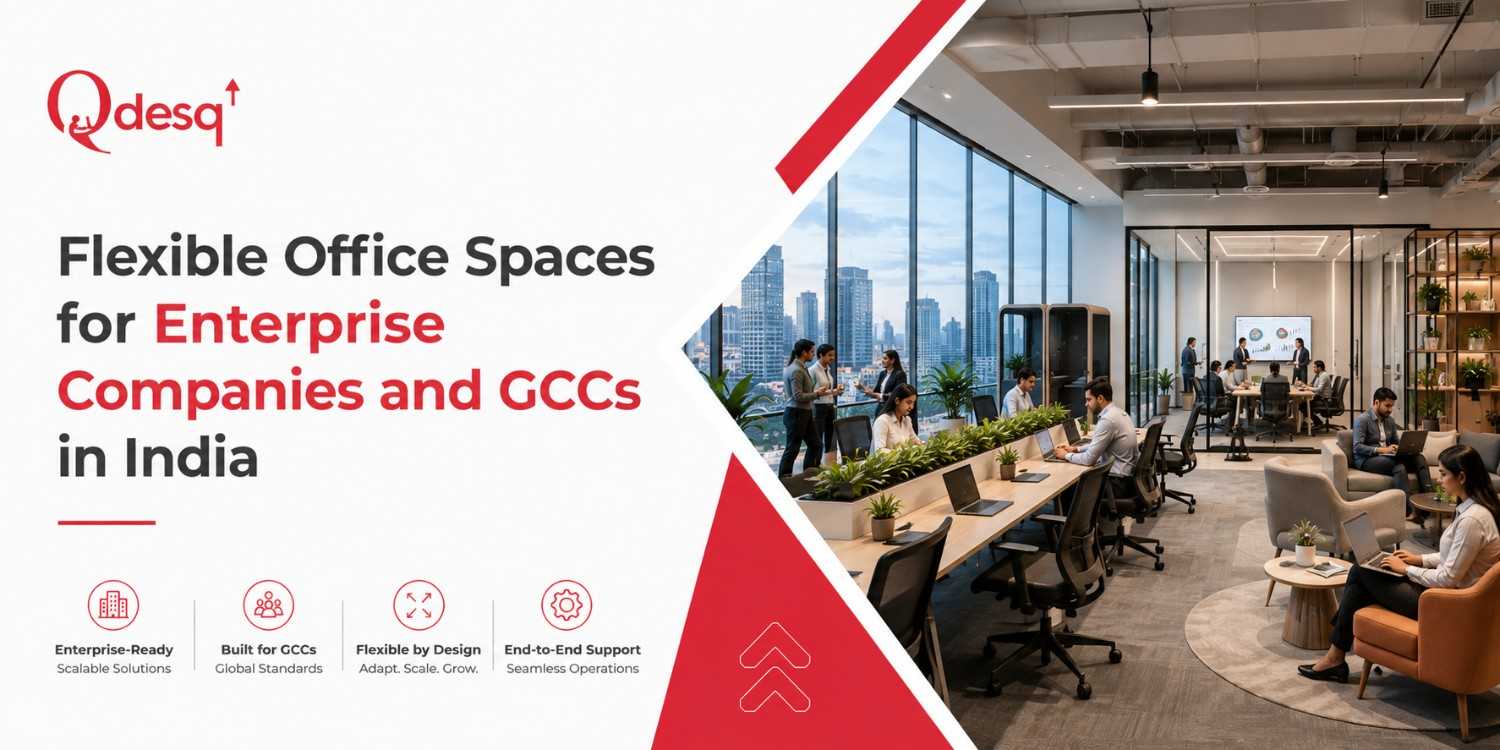
The Indian office landscape has undergone a seismic shift, shedding the rigid, long-term lease structures that once defined corporate real estate. Global Capability Centres (GCCs), the backbone of India’s high-value R&D and AI innovation, are no longer tethered to traditional footprints. Instead, they are pivoting toward managed, flexible workspaces to achieve unprecedented agility and cost-efficiency.
This evolution marks a transition from viewing the office as a fixed liability to treating it as a dynamic, strategic asset. As we examine the metrics and market drivers, it becomes clear why flexible office solutions are now the new enterprise blueprint.
The Strategic Convergence: GCCs and Flex Operators
In 2025, India’s office market reached a historic milestone, with gross leasing activity hitting a record 82.6 million to 83.3 million square feet. Within this volume, GCCs emerged as the primary driver of demand, accounting for approximately 37.7% of total leasing (JLL).
Historically, GCCs preferred the control of traditional leases. However, the current “third wave” of GCC evolution, moving from cost-arbitrage back offices to high-value R&D and AI hubs, has necessitated a shift toward managed office spaces.
This transition is fueled by the need for speed-to-market. While a traditional fit-out can take 6 to 9 months, managed flex operators can deliver bespoke, enterprise-grade environments in under 90 days.
Critical Statistics and Market Penetration
The following data points delineate the scale of the flexible office sector’s integration into the Indian enterprise ecosystem:
- Stock Projections: The flexible workspace stock in India’s top seven cities reached approximately 72.3 million square feet in 2025 and is projected to exceed 100 million square feet by the end of 2027. (Prop News Time).
- Absorption Leadership: In Q4 2025, flexible space operators became the leading occupier segment for the second consecutive quarter, capturing 26.6% of the quarterly leasing share, surpassing even the traditionally dominant IT/ITeS sector (JLL).
- GCC Influence: Nearly 40-45% of all enterprise seats taken in flexible workspaces during 2025 were occupied by GCCs, a trend expected to rise as these centres expand into Tier-II cities (Colliers).
Economic Logic: From CapEx to OpEx
The enterprise shift toward flexible spaces is grounded in a rigorous financial realignment. For a Global Capability Centre entering India, the initial investment in a Grade A office, including security deposits, interior fit-outs, and IT infrastructure, represents a massive upfront cash outflow.
1. Capital Preservation
By opting for a managed office solution, enterprises convert these high upfront costs into a predictable, monthly Operating Expenditure (OpEx). This allows GCCs to redirect capital toward their core mission: hiring specialised talent in AI, ML, and cybersecurity.
2. The Cost of Under-utilisation
Traditional leases often force companies to lease for “peak capacity,” leading to significant “ghost square footage” during hybrid work cycles. Managed spaces offer a “pay-as-you-grow” model. According to market analysis, enterprises utilising managed flex solutions can realise a 15% to 25% reduction in total occupancy costs by eliminating the inefficiencies of unutilized space and facility management overheads.
3. Mitigating Real Estate Risk
In an era of rapid technological disruption, a 9-year lease (common in Indian Grade A assets) is a liability. Flexible arrangements allow GCCs to scale headcount up or down with minimal friction, providing an “insurance policy” against market volatility.
Infrastructure and Security: The Enterprise Standard
A common misconception is that flexible workspaces are synonymous with “coworking” for startups. For GCCs and enterprise clients, the requirement is “Managed Office Space”, a private, branded, and highly secure environment within a larger flex facility.
Technical and Physical Sovereignty
Enterprises today demand, and receive, stringent infrastructure protocols that match or exceed traditional Grade A buildings:
- Data Security: Dedicated servers, firewalled VLANs, and SOC2-compliant IT environments are now standard for GCCs handling sensitive global data.
- Physical Segregation: Private access controls, dedicated reception areas, and custom-branded interiors allow a GCC to maintain its corporate culture and security perimeter.
- Sustainability (ESG): In Q4 2025, 93% of new office completions were green-certified (CBRE). Managed operators are increasingly integrating LEED and WELL certifications into their portfolios to help global parent companies meet their net-zero targets.
The Geography of Growth: Beyond the Metros
While Bengaluru, Mumbai, and Delhi-NCR remain the “Golden Triangle” of office leasing, accounting for 62% of total space take-up in 2025, a strategic decentralisation is underway (Economic Times).
The Tier-II “Hub and Spoke” Model
GCCs are increasingly adopting a “hub-and-spoke” model to tap into regional talent pools and reduce employee burnout from long commutes in metros.
- Bengaluru: Remains the largest flex market with a 31% share of total stock (Colliers).
- Pune: Leads in terms of flex penetration, reaching 11.5% of its total Grade A stock (Colliers).
- Emerging Hubs: Cities like Ahmedabad, Kochi, and Jaipur are seeing flexible workspace demand grow nearly twice as fast as in Tier-I cities, as operators expand their footprints to follow talent.
Talent Experience as a Strategic Moat
In the 2026 talent market, the office is no longer just a place to work; it is a retention tool. GCCs in India are competing for the top 1% of engineering talent. A sterile, traditional office often fails to compete with the lifestyle-centric design of modern managed spaces.
Wellness and Biophilia
- Ergonomics: Height-adjustable desks and high-end task seating (65–75 sq. ft. per seat ratio).
- Wellness Zones: In-house gymnasiums, meditation rooms, and biophilic designs (internal gardens and natural light optimisation).
- Community and Networking: While the office remains private, employees have access to the broader ecosystem of the flex building, facilitating cross-industry networking and a sense of “belonging” that traditional standalone buildings often lack.
Future Outlook: The Next Phase of Enterprise Agility
As the market approaches the 100-million-square-foot milestone by 2027, the relationship between GCCs and flexible operators will transition from transactional leasing to deep strategic integration:
Standardisation of “Enterprise-as-a-Service”
Expect a shift where flex operators provide bespoke “Private Campus” solutions, moving beyond pre-configured offices to include modular infrastructure that allows GCCs to own their network stacks and physical branding entirely, effectively mirroring the sovereignty of a standalone building within a managed ecosystem.
Hyper-Localised Talent Mapping
As Tier-II penetration deepens, operators will increasingly deploy data-driven “talent-proximity” modelling. By analysing employee commute patterns and residential density, operators will offer GCCs predictive site-selection services, ensuring offices are located exactly where niche engineering talent clusters are migrating.
Operational Decoupling
Future contracts will likely pivot toward “Usage-Based Real Estate,” where billing is dynamically tied to real-time seat-occupancy and energy-consumption metrics. This granular data, fueled by IoT and AI, will allow GCCs to treat real estate as a variable, utility-like cost, further accelerating the shift from static CapEx budgets to highly fluid, outcome-based financial modelling.
Final Thoughts
The shift toward managed flexible spaces represents a fundamental maturation of corporate real estate in India. For GCCs and enterprise firms, the office has transformed from a rigid, long-term liability into a strategic instrument for agility, talent attraction, and operational resilience.
By prioritising managed environments over traditional leases, organisations effectively decouple their growth from capital constraints and embrace a model that mirrors the rapid pace of their own innovation. As we look toward 2027, the winning enterprises will be those that treat their physical footprint as a fluid, data-driven asset.
Scale your enterprise presence with Qdesq. We provide the 100% transparency and verified listings required to navigate India’s evolving workspace landscape. With zero brokerage fees and expert support, Qdesq makes securing a future-ready managed office simple, cost-effective, and entirely hassle-free. Explore your options with Qdesq today and build a workspace strategy that scales at the speed of your global vision.


