


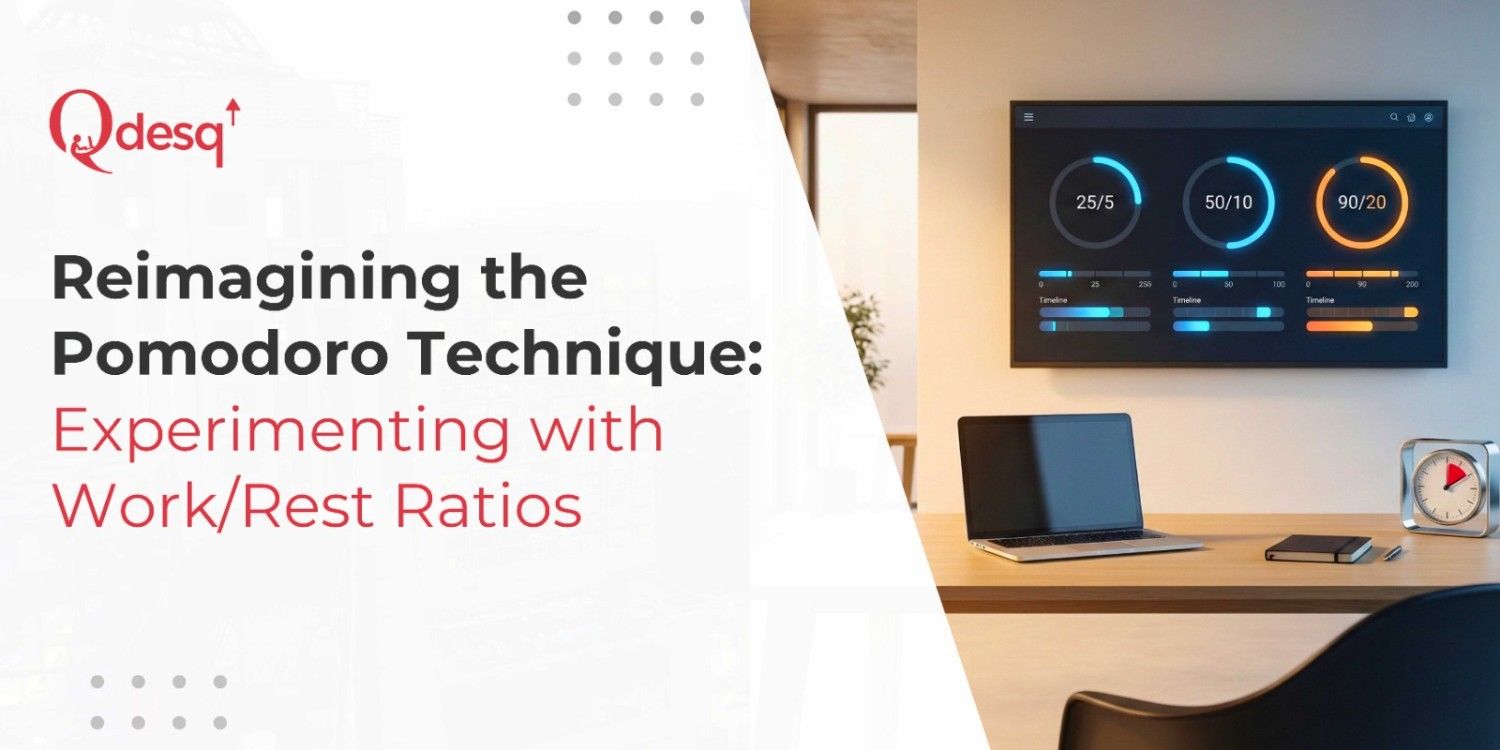
Imagine getting through your day without feeling like time disappears or your focus constantly drifts. Instead of dragging unfinished tasks into tomorrow, you actually get things done. That’s the appeal of the Pomodoro Technique, a popular productivity method that uses short work sessions and built-in breaks to make staying focused feel more manageable.
But what if that classic 25-minute work / 5-minute break rhythm isn’t the perfect fit for everyone?
This blog explores why experimenting with different work/rest ratios might unlock even greater focus, productivity, and satisfaction in your workday.
What Is the Pomodoro Technique?
The Pomodoro Technique was developed by Francesco Cirillo in the late 1980s. This technique structures work into short intervals, traditionally 25 minutes of focused effort followed by a 5-minute break. After four cycles, you take a longer rest of around 15-30 minutes.
Why the Classic Formula Works
- Attention Optimisation: Research suggests that most people can maintain peak concentration for 20 to 40 minutes before fatigue begins to increase. The 25-minute work span sits in that sweet zone.
- Breaks Prevent Burnout: Short breaks recharge your brain and help you return refreshed and ready to focus again.
- Small Wins Boost Motivation: When you complete each session, it triggers a small psychological rewards that increase your drive to keep going.
Multiple studies support that structured work/rest patterns enhance focus, reduce mental fatigue, and improve task performance compared to unstructured breaks or continuous work.
For example, a scoping review found that structured Pomodoro intervals reduced fatigue by about 20% and improved motivation and focus compared with self-paced breaks.
Why the Pomodoro Technique Isn’t Always Perfect
Despite the popularity of the Pomodoro Technique, the 25/5 pattern does not work as a magic formula for everyone.
Common Limitations
- Disrupts Deep Flow: Frequent short breaks can interrupt tasks that require deep concentration, such as writing or coding.
- Individual Differences: Attention span, energy cycles, and task types vary widely across individuals. Some naturally stay engaged for longer; others need shorter bursts.
- Task Characteristics: Administrative work, creative thinking, and analytical tasks all demand different attention styles.
A rigid “one-size-fits-all” approach can make you feel like you’re fighting your own flow instead of working with your brain’s rhythms.
Reimagining Work/Rest Ratios: Finding a Better Balance Between Work and Breaks
Instead of sticking to 25/5 all day, you can experiment with alternative rhythms that match task type, energy levels, and personal preferences. This flexibility is particularly useful when working in a coworking or shared office space, where interruptions, meetings, and collaboration naturally influence how long you can stay focused When searching for the ideal coworking space that supports your personalised productivity rhythm, platforms like Qdesq can help you discover flexible workspaces tailored to your specific needs—from quiet private cabins for deep work sessions to collaborative zones for shorter, interactive tasks..
1. Micro-Pomodoro (15/3 or 15/5)
Best For: Procrastination-resistant starts, high-distraction environments
Starting feels easier when the commitment is small. These short focus bursts reduce mental resistance, keep distractions in check, and work best for admin tasks or moments when motivation is low. This technique is especially effective in open-plan coworking spaces where ambient noise and activity can sometimes challenge sustained focus.
2. Classic Pomodoro (25/5)
Best For: Routine tasks, habit building
This rhythm works well when structure is what you need most. The balance between focus and rest feels natural, making it easier to build habits, stay consistent, and avoid mental exhaustion.
3. Mid-Length Sessions (30–45 / 6–10)
Best For: Complex tasks needing some momentum
When tasks need momentum, slightly longer focus blocks help you ease into concentration. You get enough time to think deeply without feeling drained, which suits research, planning, or creative problem-solving.
4. Deep Work Blocks (50/10 or 52/17)
Best For: Writing, coding, strategy
For demanding work, frequent breaks can feel disruptive. Longer sessions allow deeper immersion, helping you stay in flow with breaks that actually feel restorative. For these extended sessions, booking a private cabin or soundproof pod at a coworking space can provide the uninterrupted environment essential for maintaining deep concentration.
5. Ultradian Cycles (90/20–30)
Best For: Creativity, complex thinking
Some tasks benefit from going all in. Working in longer cycles aligns with natural energy rhythms, making it easier to reach peak focus and fully recover before the next intense session.
How to Personalise Your Pomodoro Style
Here’s a simple way to build your own optimised focus cycle:
Step 1: Start With a Baseline
You can simply begin with the classic 25/5 method for a few days. Use it as a reference point to understand how your focus and productivity naturally respond.
Step 2: Track Your Energy
Pay attention to when concentration feels effortless and when it drops. These patterns reveal how long you can work effectively before your energy starts fading.
Step 3: Experiment With Ratios
Test different work-rest combinations for each task type. You can find that the longer sessions may suit deep work, while shorter ones often work better for quick or routine tasks.
Step 4: Adjust Your Break Activities
Use your breaks to genuinely reset your mind. Light movement, stretching, or breathing helps far more than scrolling, which often drains energy instead of restoring it. In a coworking environment, use break times to explore the workspace amenities—take a quick walk to the breakout area, grab a coffee from the pantry, or step into a wellness room if available, maximising both mental reset and workspace benefits.
Step 5: Reflect and Iterate
Review your results over a week. Keep what improves focus, discard what doesn’t, and continuously refine your rhythm to match how you work best.
Conclusion
The Pomodoro Technique isn’t a strict rulebook; you’re not doing it “wrong” just because 25 minutes feels off. Modern productivity science and real-world experience both tell us the same thing: productivity is personal.
Whether you are taking shorter bursts to kickstart your energy, extended sessions to sink into deep thinking, or ultra-long breaks to respect your natural rhythms, the only key is flexibility. When you reimagine the Pomodoro to suit your brain, your tasks, and your energy, you unlock sustainable focus, not burnout.
So, the next step is simple: pick a new ratio, try it for three days, and observe how your productivity and satisfaction shift. You just might find your perfect rhythm lies somewhere beyond the classic tomato timer.



