


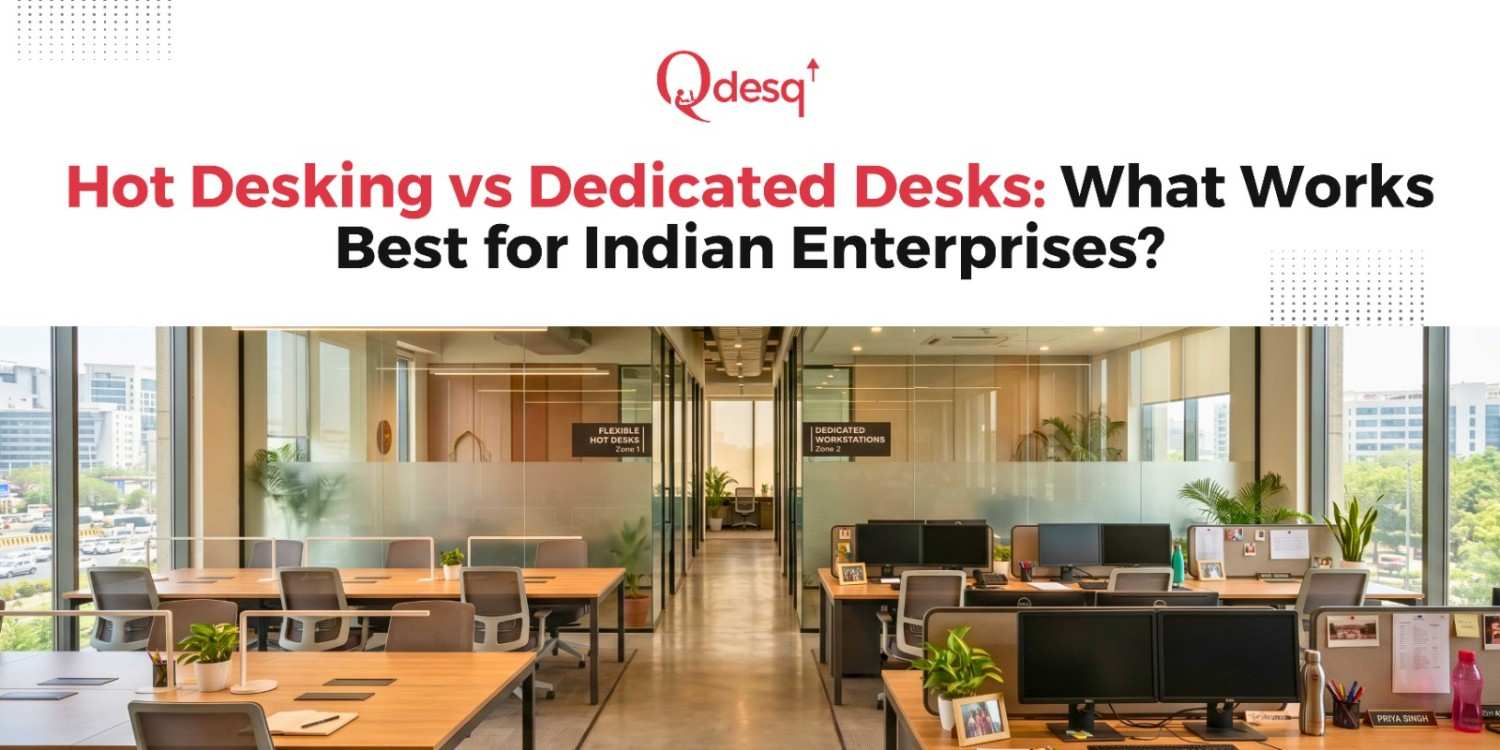
The way Indian enterprises think about office space has changed rapidly. Rising real estate costs, hybrid work models, and the need to scale teams quickly have pushed companies to rethink traditional office setups. If you are managing teams or planning an expansion, the question is no longer whether to go flexible, but how to do it right.
Two models dominate this conversation: hot desking and dedicated desks. At first glance, both seem like simple seating choices. In reality, they influence productivity, culture, cost efficiency, and even employee satisfaction in ways many companies underestimate.
This guide breaks down both options in detail so you can decide what actually works for your business, not just what sounds modern.
What is Hot Desking?
Hot desking is a flexible workspace model where employees do not have assigned seats. Instead, they choose any available desk when they arrive at the office.
This setup is common in coworking spaces and increasingly adopted by enterprises with hybrid teams. The core idea is simple: desks are shared, not owned.
Benefits of Hot Desking
- Maximum space utilisation: If your team is not in the office every day, fixed seating leads to empty desks. Hot desking solves this by ensuring every desk is used efficiently.
- Cost savings at scale: You pay for fewer seats than employees. For growing companies or cost-conscious enterprises, this can significantly reduce real estate expenses.
- Encourages collaboration: Employees sit with different teams regularly, which naturally breaks silos and sparks cross-functional conversations.
- Ideal for hybrid and remote-first teams: If your workforce is distributed or follows staggered schedules, hot desking aligns perfectly with how people actually work today.
- Faster scalability: You can onboard new employees without having to assign permanent desks immediately.
Limitations of Hot Desking
- Lack of personal space: Employees cannot personalise desks. Over time, this can impact comfort and emotional connection with the workplace.
- Daily uncertainty: Finding a desk each day may seem minor, but it can become frustrating, especially during peak days.
- Storage challenges: Without assigned desks, employees need lockers or alternative storage solutions.
- Not ideal for all roles: Teams that require fixed setups, such as design, finance, or operations, may struggle with constant movement.
What Are Dedicated Desks?
Dedicated desks are reserved workstations assigned to specific employees. Even within flexible office environments, these desks remain fixed and exclusive.
This model blends the reliability of traditional offices with the flexibility of managed workspaces.
Benefits of Dedicated Desks
- Stability and routine: Employees know exactly where they will sit. This consistency supports focus and reduces daily friction.
- Personalisation: From monitors to personal items, employees can set up their workspace to suit them best.
- Better for focused work: Roles that require deep work, multiple screens, or physical documents benefit from a fixed setup.
- Stronger team identity: Teams sitting together regularly tend to build stronger communication patterns and cohesion.
- Enhanced data and device security: For enterprises handling sensitive information, fixed desks offer better control.
Limitations of Dedicated Desks
- Higher cost per seat: You pay for desks even when they are not in use, which reduces efficiency in hybrid setups.
- Less flexibility: Scaling up or down becomes slower since desks are tied to individuals.
- Underutilisation risk: If employees work remotely frequently, many desks remain empty.
- Limited cross-team interaction: Fixed seating can unintentionally create silos within departments.
Hot Desking Vs Dedicated Desks: Key Differences at a Glance
| Factor | Hot Desking | Dedicated Desks |
| Seating | Flexible, first-come, first-served | Fixed and assigned |
| Cost Efficiency | High | Moderate to low |
| Employee Experience | Dynamic but less personal | Stable and personalised |
| Best For | Hybrid teams, startups, scaling teams | Core teams, specialised roles |
| Collaboration | High across teams | Strong within teams |
| Space Utilisation | Optimised | Can be underutilised |
Which Works Best for Indian Enterprises?
The answer depends on how your organisation actually functions, not what trend you want to follow.
- Hybrid is the default now: Most Indian enterprises have adopted some form of hybrid work. In such cases, a fully dedicated setup often leads to wasted space. Hot desking becomes a natural fit here.
- Cost pressure is real: In cities like Bengaluru, Mumbai, and Gurgaon, office costs are high. Enterprises looking to optimise budgets often lean toward hot desking or a hybrid mix.
- Workforce diversity matters: A single company may have multiple working styles. Sales and marketing teams might thrive in flexible environments, while finance and legal teams need stability.
- Talent expectations are evolving: Employees today value flexibility but also appreciate comfort and predictability. Companies that balance both tend to see better engagement.
What Do Most Successful Enterprises Do?
Instead of choosing one model, they combine both.
- Hot desks for flexible, visiting, or hybrid employees
- Dedicated desks for core teams and critical roles
This hybrid workspace strategy delivers both efficiency and employee satisfaction.
Tips for Choosing the Right Workspace Strategy
If you are deciding between hot desking and dedicated desks, these practical considerations can help:
- Audit actual office usage: Track how often desks are used. Decisions based on assumptions often lead to poor space planning.
- Segment your workforce: Not every team works the same way. Divide employees based on role, work style, and office frequency.
- Prioritise employee experience: Saving costs should not come at the expense of daily comfort. A frustrated employee costs more than an empty desk.
- Invest in infrastructure: For hot desking to work, you need booking systems, lockers, and reliable IT support. Without these, the model fails quickly.
- Plan for growth: Choose a setup that allows you to scale without constant disruption.
- Test before committing: Run a pilot program with one team or floor before rolling it out company-wide.
Final Thoughts
Choosing between hot desking and dedicated desks requires aligning your office setup with your team’s actual behaviour. For Indian enterprises navigating hybrid shifts, the most effective strategy often lies in the middle, combining the flexibility of shared seating with the stability of assigned workstations. When you move beyond assumptions and design your workspace around actual utilisation, you transform your office from a fixed overhead into a strategic asset that drives productivity and attracts top talent.
Ready to optimise your footprint without the guesswork? Qdesq simplifies your search by connecting you with verified, high-performance workspaces across India’s major business hubs. Whether you need flexible hot desks or secure dedicated suites, we provide transparent pricing and curated options tailored to your growth. Explore Qdesq today to find a workspace strategy that truly fits your business.



