


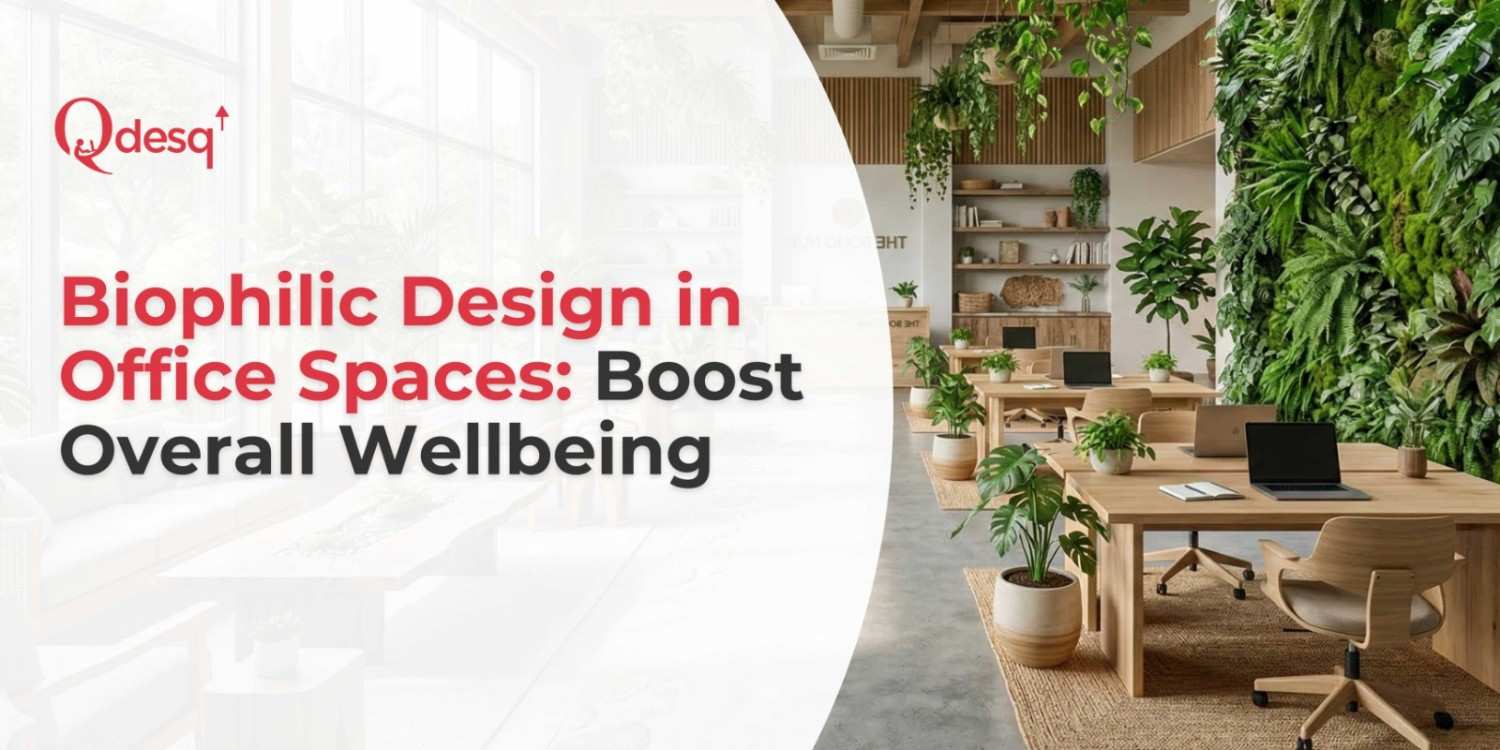
You spend a large part of your day inside your workspace, and the environment around you quietly shapes how you think, focus, and collaborate. Some spaces help you stay energised for hours, while others leave you mentally drained before the day even ends.
The difference often comes from design choices that align with how your brain and body naturally function. Natural light, indoor greenery, fresh airflow, and calming materials create spaces that support sustained concentration and emotional balance. Biophilic design brings these elements together inside flexible work environments, helping you move through meetings, deep work, and conversations with greater clarity, comfort, and consistent performance throughout your workday.
Let’s explore how biophilic design drives measurable performance outcomes in flexible office environments, supported by research and real-world workplace insights.
What is Biophilic Design Inside Flexible Offices
Biophilic design combines natural patterns, daylight, fresh air, textures, and greenery into the built environment. The goal is to support your biological rhythms and sensory needs during the workday.
You can move between focused work, meetings, creative thinking, and networking across flexible offices. Nature-inspired environments help you transition smoothly between these modes while maintaining mental clarity and emotional stability.
Research shows that people spend around 90% of their time indoors, underscoring the value of nature-focused design in the spaces where you work every day.
Inside flexible office spaces or coworking environments, you can experience biophilic design through:
- Abundant natural light and operable windows
- Indoor plants, green walls, and natural materials
- Organic shapes, warm textures, and calming colours
- Outdoor terraces and open-air collaboration zones
- Enhanced air quality and ventilation systems
Each feature contributes directly to how you feel, think, and perform throughout your workday.
The Performance Outcomes You Experience Every Day
Biophilic design influences productivity, creativity, emotional well-being, and workplace engagement. Global workplace research highlights strong links between nature-inspired environments and improved performance outcomes.
When your coworking space integrates natural elements effectively, you experience measurable benefits such as:
- Productivity Gains: Human Spaces research shows productivity increases by around 6% in nature-integrated workplaces.
- Creativity Boost: Exposure to natural elements can increase creativity by up to 15%.
- Stronger Workplace Loyalty: Workers in engaging environments are nearly three times as likely to stay connected to their workplace community.
- Higher Satisfaction: Well-designed environments drive stronger job satisfaction and deeper social connections.
Why You Feel a Stronger Impact in Coworking Spaces
Flexible workspaces revolve around community, adaptability, and experiential design. People join coworking environments seeking inspiration, flexibility, and meaningful human interaction throughout the day.
Biophilic design strengthens these experiences by:
- Supporting cognitive restoration during long work sessions
- Encouraging relaxed conversations and spontaneous collaboration
- Reducing mental fatigue during demanding tasks
- Creating calming atmospheres that help you stay engaged longer
Research from global workplace surveys shows that environments offering autonomy and diverse work settings improve perceived productivity and workplace experience.
Through natural design elements, your workspace feels energising rather than draining, which supports consistent performance across varied work demands.
Design Elements That Directly Shape Your Experience
Biophilic design delivers strong results through thoughtful integration into everyday coworking environments. You feel the impact through spatial comfort, sensory balance, and environmental quality.
- Daylight-Centred Layouts: Natural light supports circadian rhythms, improves alertness, and enhances your ability to concentrate for longer periods.
- Multi-Sensory Materials: Natural wood and stone textures, along with acoustic comfort, create a soothing sensory environment that helps you stay focused without mental overload.
- Indoor-Outdoor Work Zones: Terraces and semi-open lounges offer fresh environments for brainstorming, networking, and creative thinking.
- Nature-Inspired Spatial Flow: Green corridors, organic layouts, and plant clusters guide movement through the space while supporting calm transitions between tasks.
- Continuous Member Feedback: Workplace surveys and engagement analytics help spaces evolve to better meet your needs, ensuring they continue to support productivity and comfort over time.
How You Can Recognise High-Performing Biophilic Workspaces
You can evaluate the effectiveness of an office space through your daily experience and engagement levels. High-performing environments often reflect:
- Consistent energy levels throughout the day
- Comfortable transitions between focused work and collaboration
- Strong sense of calm during demanding projects
- Higher motivation to stay productive within the space
- Frequent social interaction and spontaneous teamwork
Workplace research shows that functional effectiveness, combined with emotional comfort, leads to stronger overall performance outcomes.
Future Outlook: Market Growth & Industry Direction
- Global flexible workspace and coworking markets are projected to grow steadily through 2030, driven by hybrid work adoption, enterprise demand, and rising focus on experience-driven office environments.
- Workplace wellness and biophilic design adoption are accelerating as companies link employee wellbeing with productivity, pushing real estate developers toward nature-integrated and health-focused workspace models.
- Sustainable and green building investments are expected to rise significantly this decade, encouraging landlords to retrofit older assets with biophilic features, smart technology, and energy-efficient infrastructure.
- Enterprise occupiers are increasingly prioritising ESG-aligned office environments, expanding demand for environmentally responsible coworking spaces that incorporate natural materials, daylighting, and wellness-centric layouts.
Final Words
When biophilic design shapes your workspace, you feel the difference in subtle yet powerful ways. Your energy stays steady through long hours. Your thinking feels sharper. Conversations flow more naturally. Over time, that daily comfort compounds into stronger productivity, deeper collaboration, and meaningful professional growth.
As flexible work continues to evolve, the spaces you choose will influence how you perform and how your business scales. If you’re ready to experience coworking environments designed around wellbeing, community, and measurable performance outcomes, Qdesq connects you with verified coworking spaces with 100% transparency and a smooth booking process.
Explore Qdesq today to discover thoughtfully designed workspaces that combine natural elements, smart infrastructure, and vibrant professional communities, so you can work better, grow faster, and stay inspired every single day.



