


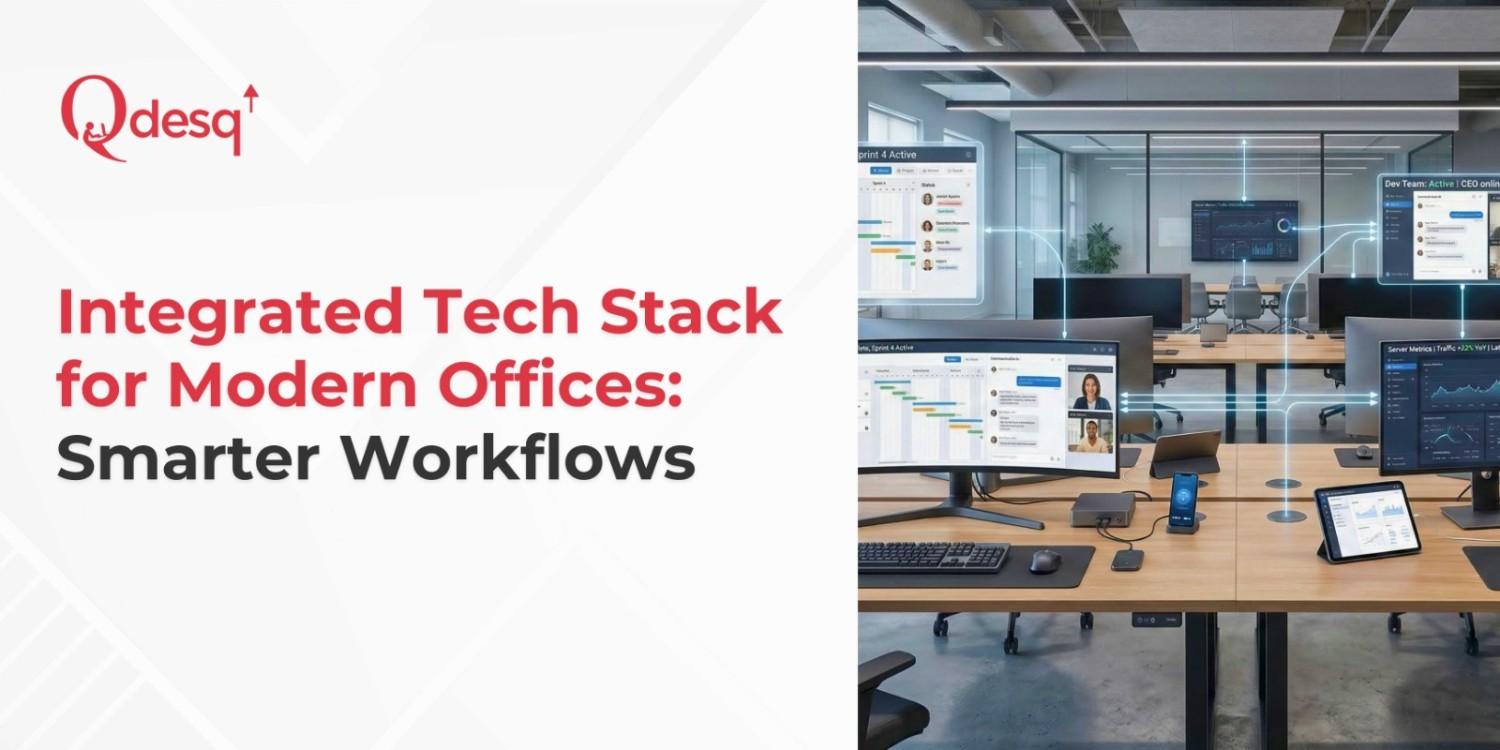
Every modern office is shaped by two invisible forces: technology and experience. One shapes operations, the other shapes how people feel while working. Across the flexible workspace industry, growth continues at an impressive pace, which fuels demand for smarter digital operations. Hybrid work also marks a major shift, with 73% of companies planning to increase flexible workspace usage and expecting technology-driven experiences in offices.
Operators, workplace managers, and founders now explore a powerful question: how does an office run like a living digital organism, where booking, billing, access, collaboration, and analytics move in sync? The answer lies in building an integrated tech stack that feels invisible yet incredibly powerful.
This guide outlines what integrated stacks look like today, how they are transforming coworking and flexible offices, and the practical steps teams can take to build a connected workplace ecosystem.
What is an Integrated Tech Stack for Modern Offices?
An integrated tech stack represents a collection of digital tools connected through automation, shared data, and unified workflows. Every system speaks the same language, which helps in creating a frictionless experience across operations, member journeys, and facility management.
You can think of it as a modern coworking environment where a single member sign-up activates Wi-Fi access, billing automation, desk allocation, and community onboarding in seconds. Modern workplace software moves toward “invisible operations,” where systems handle repetitive tasks in the background while teams focus on experience and growth.
An integrated stack, therefore, delivers three major outcomes:
- Seamless member journeys
- Real-time operational insights
- Unified digital experiences across physical and virtual environments
Core Components of an Integrated Tech Stack
Workplace Management Systems
Integrated Workplace Management Systems (IWMS) form the backbone of many modern offices. Around 64% of organisations adopt these platforms to improve efficiency and optimise space usage. It shows how central they remain in hybrid workplace operations.
These systems manage assets, energy usage, occupancy analytics, and facility workflows from one dashboard. Predictive maintenance powered by AI and IoT sensors further drives operational intelligence.
Booking, Membership, and Billing Platforms
Flexible offices rely on automated membership management tools that handle subscriptions, recurring payments, and desk bookings. Digital wallet usage in physical transactions has grown dramatically in recent years, reflecting a broader shift toward automated payment ecosystems.
Connected billing platforms also sync with accounting software, creating accurate financial reporting and smoother revenue tracking.
Access Control and Security Systems
Biometric entry, smart locks, and cloud-based access systems enhance both convenience and safety. Touchless entry methods accelerate check-ins and align with modern expectations for seamless experiences inside coworking spaces.
Collaboration and Communication Tools
Integrated collaboration hubs combine video conferencing, messaging, and project workflows. Hybrid teams rely on these unified systems to maintain strong engagement and productivity regardless of location.
Data Analytics and Automation Layers
Modern stacks include advanced analytics that unify booking data, financial performance, and member engagement insights. Automation platforms connect different apps through APIs, reducing manual work and enabling real-time operational intelligence.
How to Build an Integrated Tech Stack for Modern Offices
1. Define Experience-Driven Goals
You can begin with a clear vision focused on member experience and operational clarity. Consider daily journeys within the workspace, such as onboarding, meeting bookings, community engagement, and facility management. Every tech decision flows from these user journeys.
2. Map Current Workflows and Tools
List every platform already used across operations. You can identify touchpoints where data moves between systems. Many organisations operate hundreds of software tools, creating fragmentation without integration. A clear workflow map helps teams discover opportunities for consolidation and automation.
3. Select a Unified Core Platform
Choose a central workplace management or coworking platform that acts as the ecosystem hub. This platform connects membership data, bookings, payments, and analytics through integrations or APIs. Cloud-based systems dominate modern deployments, with over 60% of organisations moving toward scalable digital infrastructure.
4. Build Modular Integrations
A powerful stack grows through modular integrations rather than isolated tools. Examples include:
- Smart access connected to membership plans
- Billing automation linked with accounting software
- IoT sensors feeding occupancy data into analytics dashboards
Automation platforms help systems exchange data instantly, reducing administrative workload and improving operational accuracy.
5. Focus on Data Visibility and Insights
Unified analytics unlock real-time insights into member engagement, space utilisation, and revenue performance. Integrated dashboards support data-driven decisions around pricing, space design, and community programming.
6. Future-Proof Through AI and Smart Building Technology
AI-driven analytics, automated workflows, and smart building systems help offices evolve with changing work patterns. Energy-efficient HVAC systems powered by AI deliver measurable cost savings while improving comfort.
Real-Life Examples of Integrated Tech in Flexible Offices
- A member discovers your workspace, books a tour online, the CRM captures details, the access system issues a visitor pass, and the community app automatically schedules onboarding.
- A freelancer purchases a day pass via a mobile app, the payment gateway confirms instantly, WiFi credentials are generated, smart locks grant entry, and the occupancy dashboard updates usage data.
- A startup team books meeting rooms through the member portal, calendar sync blocks schedules, video conferencing launches automatically, catering requests trigger vendor notifications and billing entries.
- An operator reviews the unified dashboard each morning, and revenue metrics, occupancy heatmaps, and member feedback scores appear together. AI suggestions recommend pricing adjustments and targeted retention campaigns.
Conclusion
Your workspace can run more smoothly, scale faster, and deliver experiences people genuinely value. When your booking tools, analytics, access systems, collaboration platforms, and automation layers integrate into a single ecosystem, daily operations flow naturally while your team focuses on community, service, and growth. Instead of juggling disconnected software, you build a workplace where technology quietly supports every interaction, every decision, and every member journey.
If you are currently exploring flexible offices that already operate with strong digital infrastructure, platforms like Qdesq help you compare and discover coworking spaces built for modern workflows. Through verified listings, transparent comparisons, and seamless discovery, you can evaluate environments where integrated technology already powers operations and member experience.
With the right workspace ecosystem around you, your office evolves into a connected environment where productivity, collaboration, and operational clarity grow together.



