


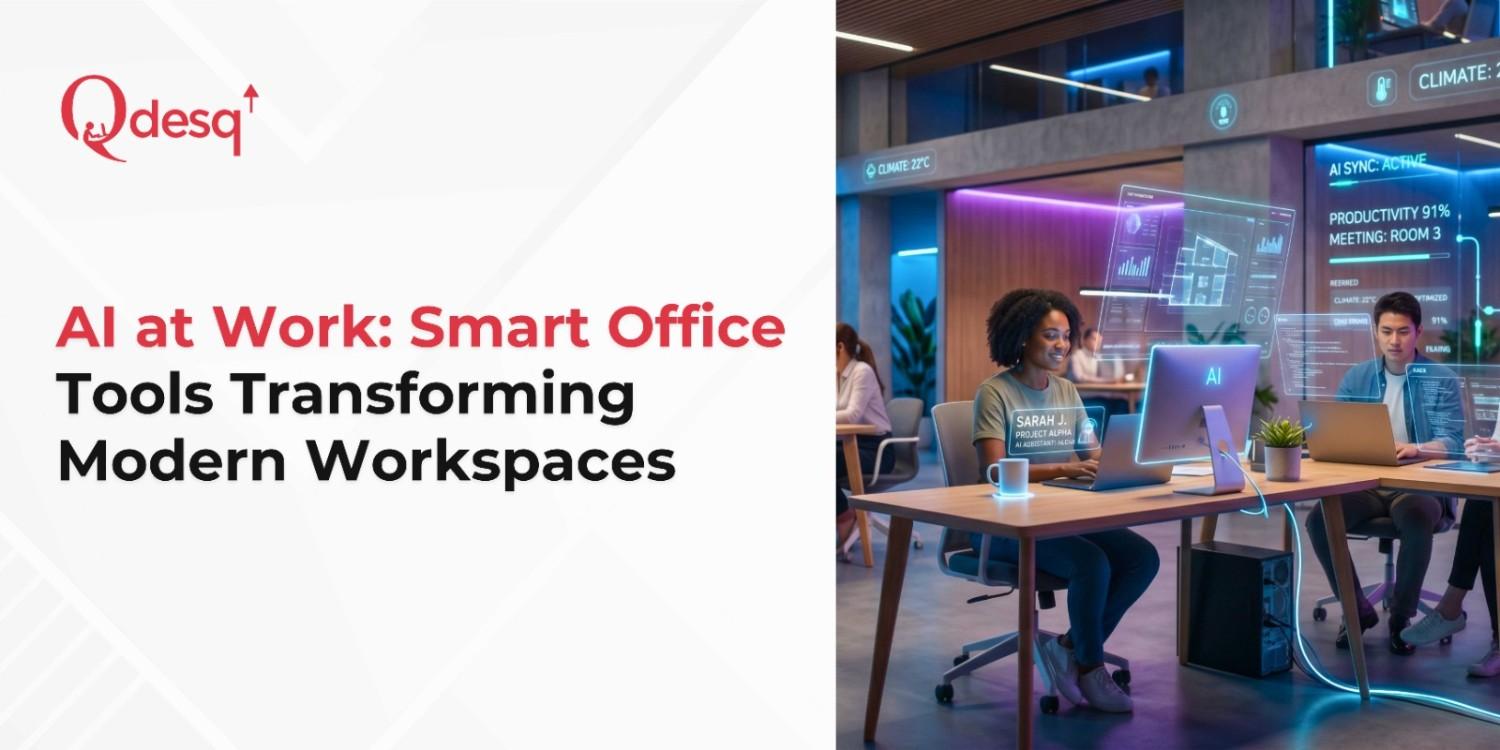
Imagine walking into the office on a Monday morning, but instead of juggling sticky notes, managing team schedules, or hunting for a free meeting room, you’re greeted by an intelligent system that already knows your schedule, your preferences, and even the ideal workspace setup for your day. It’s the smart office reality unfolding in workplaces around the world, and AI is the engine driving this shift.
From smarter bookings to optimised layouts, AI is redefining how teams interact with physical workspaces, making offices more efficient, frictionless, and even more human-centric. Let’s explore how.
What Is a Smart Office (And Why You Should Care)
A smart office is more than just “tech in office spaces.” It’s a connected, data-driven workspace powered by sensors, machine learning, and automation that makes everyday decisions like allocating rooms, scheduling desks, adjusting temperature, or even responding to employee queries without human intervention.
Basically, smart office technology aims to:
- Maximise employee productivity
- Improve space utilisation
- Reduce operating costs
- Enhance comfort and well-being
And the secret ingredient behind all of this? Artificial Intelligence.
AI turns data into action, and today’s offices are collecting more data than ever. With this data, AI systems can make predictive decisions that save time, reduce waste, and create more seamless workflows.
How Smart Office Tools Are Changing the Way Teams Book, Use, and Manage Workspaces
Let’s break down how AI is reshaping everyday workspace management from the moment someone decides to go into the office to the moment they leave.
1. Intelligent Space Booking: Effortless and Optimised
One of the biggest pain points in modern offices has long been the booking of rooms and desks. Traditional systems are static, manual, and prone to conflicts. AI changes this by:
- Automatically suggesting the best meeting spaces based on attendee size and schedule.
- Resolving conflicts by rebooking meetings if rooms free up before the scheduled time
- Allowing ad-hoc desk booking by just plugging in a device on arrival
Picture this: you didn’t book a desk, but when you arrive, your device connects and instantly reserves one for you, and that’s AI, removing friction.
2. Smarter Usage Through Analytics: Data Drives Decisions
Real-time occupancy sensors and analytics platforms collect data about how spaces are used, then transform that into actionable insights:
- Which areas are underutilised?
- Are open desks frequently empty?
- Do certain teams prefer certain rooms?
This data helps workplace managers reconfigure environments to match real needs rather than assumptions. AI can even predict trends, for example, which floors might need expansion based on past usage patterns.
Some workplace studies suggest that AI-driven analytics may improve operational efficiency by 20–25% in hybrid environments.
3. Predictive Resource Allocation: When AI Thinks Ahead
Smart office systems can forecast:
- Future maintenance needs before machines fail, reducing downtime.
- HVAC adjustments based on occupancy and weather patterns
- Peak usage periods that might require more seating or meeting capacity
Predictive tools analyse historical patterns to make future decisions. That means fewer surprises and more uptime for the teams that rely on these spaces.
4. Better Employee Experience Through Personalisation
Smart offices are human-centric, and AI can adapt the workspace environment based on personal preferences:
- Automatic adjustment of lighting and temperature
- Personalised desk reservations based on work style
- Suggestions for rooms optimised for collaboration vs. focused work.
Personalisation improves employee satisfaction, which in turn translates into better morale and productivity.
Gartner predicted that by 2026, 50% of large enterprises will use AI workplace assistants to boost employee engagement and productivity.
5. AI Helpers: From Virtual Assistants to Smart Agents
AI is becoming our collaborative partner. Tools like Zoom AI Companion or Microsoft 365 Copilot go beyond scheduling:
- Summarising meetings
- Drafting agendas
- Brainstorming ideas
- Extracting key insights from conversations
Some assistants can even act on your behalf, like booking spaces, scheduling follow-ups, and automating tasks you’d otherwise forget or postpone.
Research shows AI scheduling can save employees up to 4–6 hours per week. This proves that these tools deliver real-world time savings.
Case Studies: Smart Offices in Action
Example 1: Microsoft and AI-Driven Flexible Spaces
Microsoft employees use AI to find suitable spaces, automatically release unused rooms, and analyse workspace trends. This boosts both efficiency and employee satisfaction because teams can focus on their work rather than logistics.
Example 2: EDGE Workspaces – Predictive Management in Practice
EDGE Workspaces uses AI to optimise energy and comfort, allocate space based on team needs, dynamically adjust layouts, and assist tenants with dashboards that reveal occupancy trends.
Looking Ahead: Future Developments in Smart Office Technology
AI in the workplace is still early, and the next few years promise exciting shifts:
- Context-Aware Offices: Systems that anticipate what you need, like lighting, room temperature, and desk assignment, before you ask.
- Autonomous Building Management: AI will run buildings end-to-end, handling security, energy, and even environmental comfort.
- Human-Centric Intelligent Environments: Workplaces that learn and respond to emotional, cognitive, and productivity signals.
Final Thoughts
A smart office means removing the “busy work” that eats into your team’s day. When AI handles the logistics of room bookings, climate control, and space utilisation, you are free to focus on the work that actually moves the needle.
As the workplace continues to evolve, staying ahead means embracing tools that make collaboration frictionless. If you’re ready to transition into a tech-enabled environment that boosts productivity and reduces overhead, Qdesq is your gateway. We connect you with India’s most advanced, AI-ready coworking spaces tailored to your team’s needs.
Visit Qdesq today and find a smarter workspace where technology and talent work in perfect harmony.



