


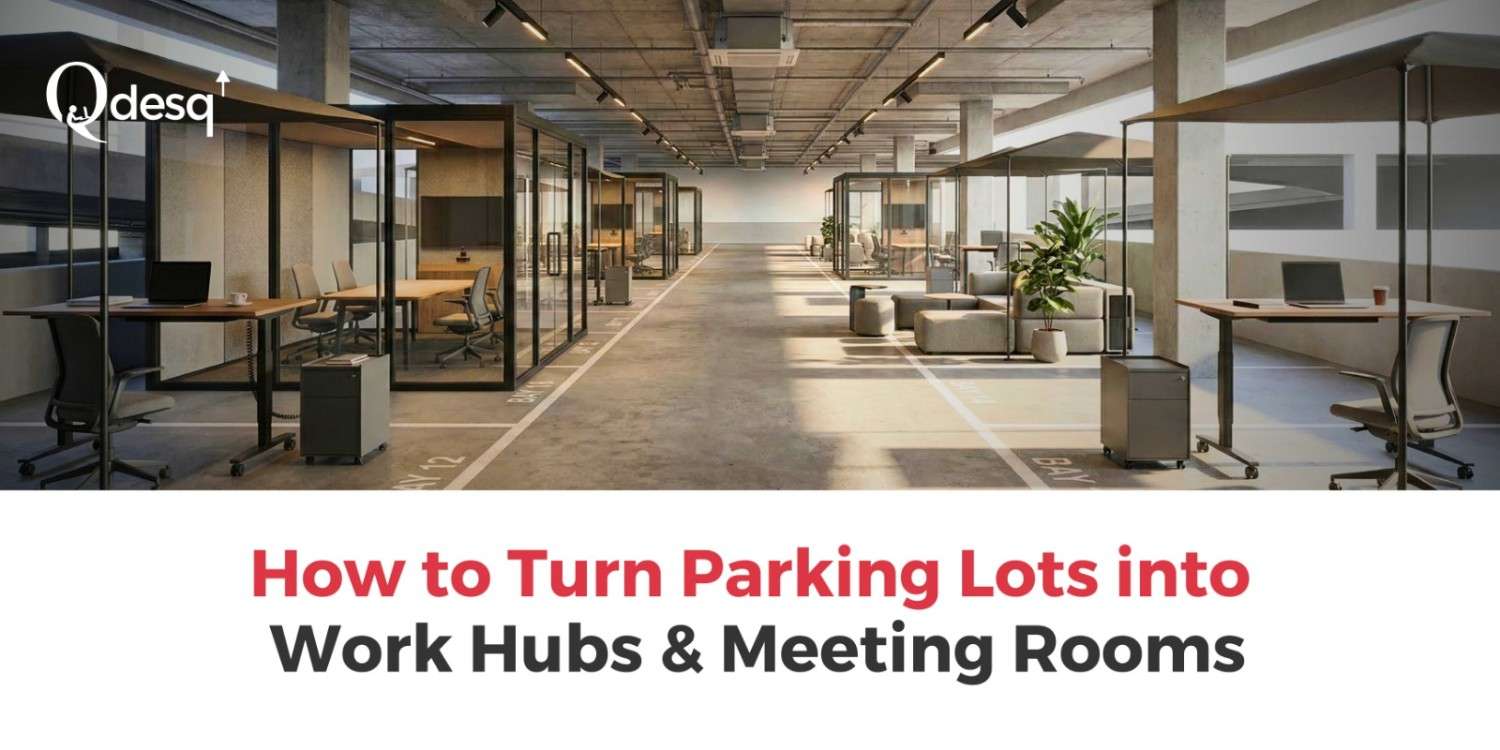
Across every Indian city, you can spot parking lots half full on weekdays, vacant podium levels in commercial complexes, and unused side plots sitting idle between buildings. At the same time, demand for flexible workspaces continues to surge as hybrid teams look for accessible, neighbourhood-based hubs. This shift has quietly redefined what qualifies as valuable real estate.
If you look closely, those underutilised spaces already have location, connectivity, and infrastructure on their side. With the right vision, design strategy, and operational model, you can transform them into high-performing work hubs and meeting rooms.
In this blog, you’ll discover how to strategically convert idle spaces into revenue-generating workspace assets, design them for flexibility and community.
Why Unused Spaces Have Become Prime Real Estate
Flexible work continues to expand across India and globally. Demand has risen nearly sixfold since 2020, with flexible offices accounting for around 15-20% of new office leasing activity.
Hybrid work patterns, enterprise decentralisation, and distributed teams are driving companies toward smaller, accessible hubs near residential clusters. Parking areas, peripheral zones, and vacant transitional spaces offer three major advantages:
- Speed of deployment through modular construction
- Lower acquisition costs since infrastructure already exists
- Localised access enabling neighbourhood work hubs
Start With Vision Before You Design
If you’re taking on a parking lot or other open land, begin by envisioning your purpose. Ask yourself:
- Who is the audience? Freelancers, corporate teams, hybrid workers, students?
- What kind of work experiences are missing in this neighbourhood?
- How can the space improve the quality of life and productivity?
Parking lots offer lots of flexibility; for example, they’re flat, usually accessible, and most importantly, devoid of permanent constraints. Their blank canvases mean you can segment your space for multiple uses: solo work pods, meeting rooms, event lawns, lounges, and even café areas. Yet, the design must feel intentional, a perfect place where work happens naturally.
Design with Modular Flexibility in Mind
Modular and prefab solutions are game-changers here. Instead of expensive construction, you can deploy high-quality, pre-built elements that slot into the space with minimal effort.
Think of acoustic pods for quiet work, glass meeting rooms, and lightweight “work sheds” that offer shade, amenities, and connectivity. These elements give you quick deployment, easy relocation, and flexibility as your audience’s needs evolve.
One benefit of modular design is that you can test, iterate, and scale without heavy commitments. Install a cluster of meeting pods in a corner of a lot, observe usage patterns, and then expand where demand is strongest. This makes economic sense and keeps you adaptable.
Prioritise Comfort & Connectivity
You’re creating work environments, so don’t cut corners on comfort. Whether it’s a parking lot or an abandoned warehouse, amenities are what make spaces usable. Here are the essentials:
- High-speed internet connectivity: this is non-negotiable for productive work.
- Power access: consider modular power stations if infrastructure is limited.
- Climate comfort: shade structures, heating lamps, or even misting systems can make outdoor spaces hospitable year-round.
- Acoustic control: easily overlooked, yet critical for meeting rooms and focused work.
- Furniture that feels intentional: ergonomic seating, suitable desks, and well-placed lighting make users feel at ease.
Mix Uses to Expand Appeal
One of the most powerful moves you can make is layering uses, and this is where parking lots excel. They aren’t confined by walls, so you have latitude to blend zones:
- Quiet work nooks for solo focus
- Team meeting pods for collaboration.
- Outdoor lounges for casual work or community events
- Cafés or barista stands to keep people fed and social.
This mix helps you attract a broader range of visitors and keeps the space alive throughout the day. It’s a simple principle: the more a space serves, the more reasons people have to show up.
Integrate Local Culture and Community
Commercial real estate often overlooks a foundational truth: spaces are lived in. Your parking lot transformation should reflect the local context, businesses, commuters, residents, and the area’s rhythms. Consider hosting:
- Pop-up workshops
- Weekend markets
- Networking evenings
- Skill shares and talks
Operational Models That Work
There are several commercial strategies you can adopt:
- Membership-based access: recurring revenue with perks like booking privileges
- Hour/block rental of meeting rooms: ideal for teams needing occasional space
- Partnership with local corporates: provide branded hub days or satellite offices
- Flex desk day passes: appeal to gig workers or business travellers.
Anticipate Challenges with Purpose
You’ll face questions about zoning, infrastructure, weather, and acoustics. But view these as design catalysts, not roadblocks. Zoning conversations open doors to community alignment. Infrastructure gaps invite creative solutions like solar canopy installations or mobile power units. Weather conditions encourage flexible, adaptive designs that work in sunshine and rain.
The Bigger Picture: Urban Value and Resilience
Today’s cities are grappling with hybrid work, empty spaces, and changing commercial needs. Repurposing under-utilised land is a form of urban regeneration. Cities that embrace hybrid, mixed-use environments tend to be more vibrant and resilient. Those spaces become nodes of activity that increase foot traffic, support nearby businesses, and create new rhythms of productivity and connection.
Closing Thought: Activate Space. Accelerate Opportunity.
When you transform a parking lot or overlooked corner into a functional work hub, you reshape how people connect, collaborate, and build. You convert idle land into productive infrastructure that supports hybrid teams, startups, and independent professionals seeking flexibility with purpose.
The next step is connecting that space to real demand. That’s where Qdesq comes in. With 1000+ verified coworking spaces, private offices, and meeting rooms across India, Qdesq helps you position your newly activated workspace in front of growing businesses actively searching for flexible solutions.
From transparent listings to seamless booking support, Qdesq makes it easier for you to drive occupancy and visibility. Explore Qdesq today and turn your underused space into a high-performing work destination aligned with the future of flexible real estate.



